

Decatur Yard Waste Removal Services
Choose our Yard Waste Removal for fast, reliable service that keeps your property looking its best—enjoy a cleaner, safer outdoor space without lifting a finger.
Get a Free QuoteOur Decatur Junk Removal Services
Yard Waste Removal in Decatur, GA – Local Service Guide
Yard waste removal in Decatur, GA is a year-round necessity, especially in neighborhoods like Oakhurst and Winnona Park where mature trees and seasonal storms generate significant debris. Homeowners often need removal services after spring pruning, fall leaf drop, or following severe weather. For residential items such as old furniture or appliances, triggers include home renovations or moving, with options to donate, recycle, or dispose based on item condition. Access and weather can impact logistics, particularly in areas with narrow driveways or heavy rainfall. For residential spaces like garages, basements, and yards, cleanouts are common after storms or during seasonal yard cycles, with frequency depending on property size and tree coverage. Commercial clients in downtown Decatur or near East Lake require timely, discreet removal to maintain operations, often dealing with higher volumes and strict schedules. Specialty services—such as for construction debris or estate cleanouts—demand careful planning and coordination, especially for larger properties or during major renovations. For local rules and resources, consult the Decatur Public Works Department.
Key Considerations for Yard Waste Removal in Decatur
- Timing seasonal pickups around leaf drop and storm events
- Obtaining necessary permits for large disposals
- Using approved disposal and recycling channels
- Ensuring access for removal vehicles in tight neighborhoods
- Estimating volume for efficient scheduling
- Coordinating with city services for specialty or bulk items
Benefits of Yard Waste Removal in Decatur
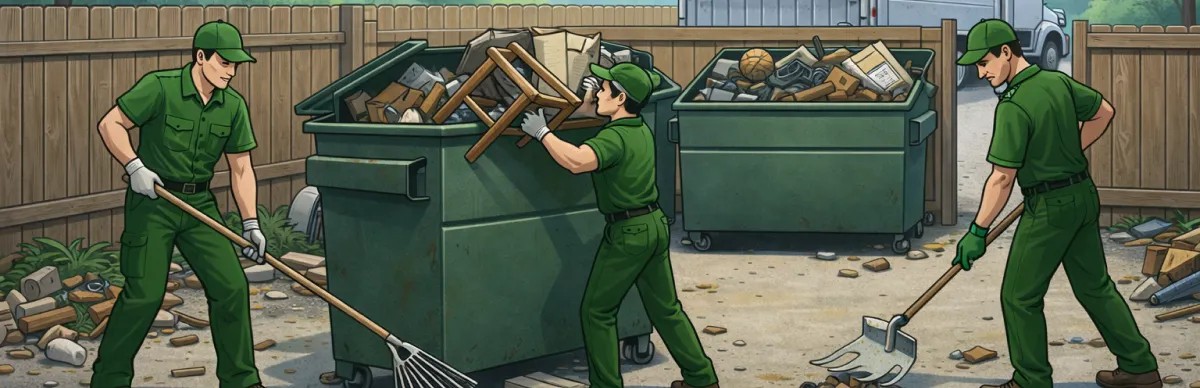
Fast and Reliable Yard Waste Pickup
Eco-Friendly Disposal Solutions
Affordable Yard Waste Removal Pricing
Experienced Local Cleanup Teams
Flexible Scheduling Options
Improved Curb Appeal for Your Property
Coordinating Yard Waste Collection with Decatur's Public Works Department
Decatur residents must follow specific municipal guidelines when preparing yard waste for curbside collection. The City of Decatur's Public Works Department oversees sanitation services, including the pickup of leaves, branches, grass clippings, and other organic debris generated from routine landscaping. Yard waste must be separated from regular household trash and placed at the curb in designated containers or bundles to ensure proper collection.
- Branches and limbs must be cut to lengths no longer than four feet and bundled with biodegradable twine
- Loose leaves and grass clippings should be placed in paper yard waste bags or clearly marked reusable containers — plastic bags are typically prohibited
- Stumps, root balls, and dirt are generally not accepted through standard curbside collection and may require separate disposal arrangements
- Yard waste must not block sidewalks, storm drains, or roadways during placement
Residents should confirm their scheduled collection day and any seasonal adjustments by contacting the department directly.
Decatur Public Works Department
509 N. McDonough Street, Decatur, GA 30030
Phone: (404) 370-4100
Official Website: Decatur Public Works Department
Decatur's Tree Canopy Conservation Ordinance and Yard Debris Disposal
Decatur maintains a robust Tree Canopy Conservation Ordinance that directly affects how residents and contractors handle tree-related yard waste. Before removing any tree with a diameter at breast height (DBH) of six inches or greater, a tree removal permit must be obtained through the city. This regulation applies to both residential and commercial properties and has significant implications for yard waste volume and disposal.
- Tree removal permits are required before cutting protected trees; unauthorized removal may result in fines and mandatory replanting
- Large-scale tree debris from permitted removals — including trunks, root systems, and canopy material — often exceeds standard curbside collection limits
- Contractors performing tree work must ensure debris is hauled to an approved facility and not left on public rights-of-way
- Stump grinding residue and wood chips may be composted on-site or transported to a licensed composting facility
Residents planning significant tree work should consult the Decatur Planning Department for permit requirements before generating yard waste.
Decatur Planning Department
509 N. McDonough Street, Decatur, GA 30030
Phone: (404) 370-4100
Official Website: Decatur Planning Department
Georgia's Solid Waste Management Act and Yard Waste Disposal Requirements
Georgia's regulatory framework for yard waste disposal is governed at the state level by the Georgia Environmental Protection Division (GA EPD), which administers solid waste management rules under the Georgia Comprehensive Solid Waste Management Act (O.C.G.A. § 12-8-20 et seq.). This legislation establishes standards for the handling, transportation, and disposal of all solid waste categories, including yard trimmings and vegetative debris.
- Yard trimmings — defined as leaves, brush, grass clippings, shrub and tree prunings, and similar vegetative material — are banned from municipal solid waste landfills in Georgia
- Disposal must occur at permitted composting facilities, yard trimmings facilities, or through municipal collection programs that divert material from landfills
- Burning yard waste within Decatur city limits is subject to local fire codes and air quality regulations; open burning permits may be required from the Decatur Fire Department
- Haulers transporting yard waste commercially must comply with GA EPD permitting and manifest requirements
This landfill ban makes proper separation of yard waste from household trash essential for all Decatur residents and service providers.
Georgia Environmental Protection Division
2 Martin Luther King Jr. Drive SE, Suite 1456, Atlanta, GA 30334
Phone: (404) 656-4713
Official Website: Georgia Environmental Protection Division
Stormwater Protection and Proper Yard Waste Handling in Decatur
Improper yard waste disposal poses direct risks to Decatur's stormwater infrastructure and local waterways. The city's Stormwater Management Program enforces regulations designed to prevent organic debris from entering storm drains, which flow untreated into local creeks and tributaries. Yard waste left in streets, gutters, or near drainage inlets contributes to nutrient loading, algae growth, and blockages that increase flood risk.
- Never blow or rake leaves, grass clippings, or debris into streets or storm drains — this violates stormwater pollution prevention requirements
- Composting on-site is encouraged as a sustainable alternative that reduces hauling needs and enriches soil
- Mulching mowers can return grass clippings to the lawn, eliminating disposal entirely
- Erosion control measures may be required when clearing large vegetated areas, particularly on slopes or near waterways
- Violations of stormwater regulations may result in code enforcement action through Decatur Community Development
The Decatur Environmental Sustainability Board provides additional guidance on environmentally responsible yard waste management practices for residents and landscaping professionals.
Sorting and Separation Requirements for Decatur Yard Waste Removal
Proper sorting of yard waste materials is critical for compliance with both municipal collection standards and Georgia's landfill diversion mandates. Mixing yard waste with construction debris, household trash, or hazardous materials can result in rejected loads at composting facilities and potential code enforcement violations. Decatur residents and contractors must ensure clean separation before placing materials for collection or transport.
- Accepted yard waste materials: leaves, grass clippings, small branches (under four feet), shrub trimmings, weeds, and flower bed debris
- Prohibited contaminants: plastic bags, treated lumber, painted wood, rocks, soil, sod, animal waste, and any non-vegetative material
- Branches exceeding four inches in diameter may require chipping or cutting before curbside placement
- Palm fronds, bamboo, and invasive species should be bagged separately and may require special handling at composting facilities
- Landscape fabric, plastic edging, and irrigation components mixed with yard waste must be removed before disposal
Large-volume yard waste from renovation or land-clearing projects may exceed standard collection limits. In such cases, residents should coordinate with a licensed hauler to transport materials to a GA EPD-permitted yard trimmings facility. The Decatur Engineering Division can provide guidance on right-of-way use if staging materials near the roadway is necessary.
What Neighborhoods Do We Serve Throughout Decatur, GA?
- Oakhurst: This walkable neighborhood features mature tree canopy and older bungalow-style homes with established landscaping. Narrow residential streets and on-street parking may require advance coordination for yard waste removal vehicles, and large tree debris from protected oaks and hardwoods is common.
- Winnona Park: Characterized by mid-century homes on generous lots with dense vegetation, this area generates significant seasonal leaf and branch debris. Sloped yards near creek corridors may require erosion control measures during large-scale clearing projects.
- Great Lakes: This neighborhood includes a mix of renovated and original ranch-style homes with sizable yards. Cul-de-sac street layouts provide adequate truck access, though overhead power lines and low-hanging branches may affect equipment clearance for tree debris removal.
- Lenox Place: Featuring newer infill construction alongside historic properties, yard waste volumes vary considerably. Properties in or adjacent to historic overlay zones may require additional review before significant tree removal or landscape alteration.
- MAK Historic District: As a designated historic district, tree removal and major landscape changes require coordination with the Decatur Planning Department. Mature canopy trees generate heavy seasonal debris, and narrow lot lines limit staging areas for yard waste.
- Glennwood Estates: Larger residential lots in this area produce substantial yard waste from extensive lawns and wooded borders. Wide driveways and open street access facilitate efficient collection and hauling operations for both routine maintenance and storm cleanup debris.