

Decatur Retail Stores Junk Removal Services
Choose our Retail Stores Junk Removal for prompt, professional service that keeps your business clutter-free and running smoothly—so you can focus on what matters most: your customers.
Get a Free QuoteOur Decatur Junk Removal Services
Retail Stores Junk Removal in Decatur, GA – Local Service Guide
Retail stores in Decatur, GA, face unique junk removal needs, from seasonal inventory changes to store renovations. In busy areas like Oakhurst Village and Decatur Square, timely removal of old fixtures, shelving, and packaging is crucial to maintain a clean, inviting retail environment. Local businesses often require after-hours or discreet pickups to avoid disrupting customers and operations. Decatur’s retail sector also benefits from eco-friendly disposal options, with many items eligible for recycling or donation through local programs. For larger projects, such as store closures or remodels, coordination with property managers and adherence to city guidelines is essential.
Retailers must also consider logistics like alley access, limited parking, and weather impacts, especially during peak shopping seasons. For more information on local disposal rules and resources, visit the Decatur Public Works Department.
Benefits of Retail Stores Junk Removal in Decatur
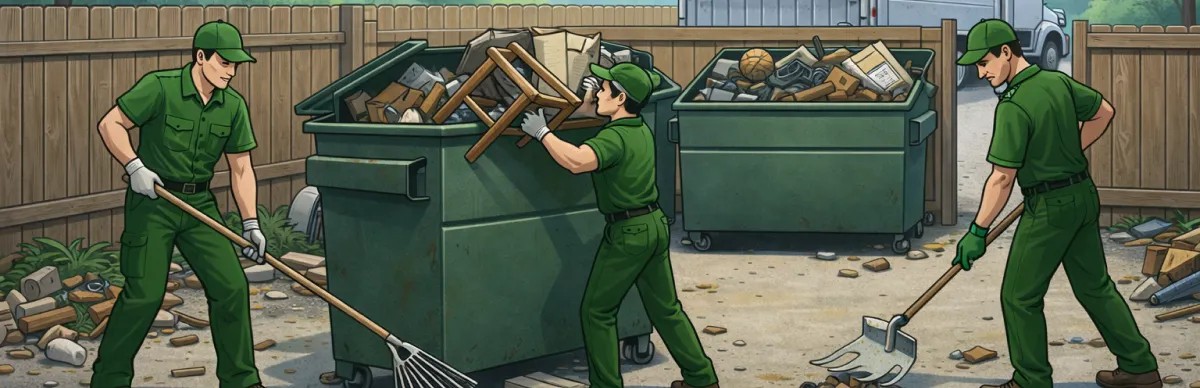
Fast and Reliable Service
Eco-Friendly Disposal Solutions
Experienced Junk Removal Team
Flexible Scheduling Options
Comprehensive Cleanout Services
Affordable and Transparent Pricing
Coordinating Retail Store Cleanout Waste with Decatur's Public Works Department
Retail store junk removal in Decatur requires coordination with the city's municipal sanitation services to ensure proper disposal of commercial waste. Retail establishments generate diverse waste streams during store closures, renovations, and seasonal inventory purges, including shelving units, display fixtures, signage, packaging materials, and outdated merchandise. The Decatur Public Works Department oversees sanitation and solid waste management services within city limits.
Key considerations for retail store cleanouts include:
- Commercial waste classification: Retail store debris is classified as commercial solid waste under Georgia regulations, requiring disposal through licensed commercial haulers rather than residential collection programs
- Scheduling restrictions: Removal operations in commercial districts should comply with Decatur's noise ordinances and avoid peak pedestrian hours
- Material separation: Cardboard, plastics, metals, and electronic components must be sorted prior to disposal
- Bulk item coordination: Large fixtures such as display cases and shelving systems require advance scheduling for removal
Decatur Public Works Department
128 S. Candler Street, Decatur, GA 30030
Phone: (404) 377-5571
Official Website: Decatur Public Works Department
Georgia's Solid Waste Management Act and Retail Disposal Compliance
Retail store junk removal in Decatur must comply with the Georgia Comprehensive Solid Waste Management Act (O.C.G.A. § 12-8-20) administered by the Georgia Environmental Protection Division (GA EPD). This legislation establishes the regulatory framework governing the collection, transportation, and disposal of solid waste generated by commercial establishments, including retail stores.
Retail operators and junk removal contractors should be aware of the following state-level requirements:
- Solid waste handling permits: Haulers transporting retail store waste must hold valid permits issued by GA EPD for commercial solid waste collection
- Manifest documentation: Loads containing mixed commercial waste should be documented with waste manifests identifying material types and destination facilities
- Landfill restrictions: Georgia prohibits disposal of lead-acid batteries, used motor oil, and yard trimmings in municipal solid waste landfills
- Hazardous waste exclusion: Retail items containing hazardous components—such as fluorescent lighting, cleaning chemicals, and aerosol cans—must be separated and disposed of through licensed hazardous waste facilities
- Recycling encouragement: Georgia's solid waste management hierarchy prioritizes source reduction, reuse, and recycling before landfill disposal
Violations of state solid waste regulations may result in civil penalties and enforcement actions by GA EPD.
Decatur Permit and Zoning Requirements for Retail Store Removal Projects
Retail store junk removal projects in Decatur that involve structural modifications, demolition of built-in fixtures, or significant renovation work may require permits from the city's Community Development Department. The Permits and Zoning Division administers building permits, inspections, and zoning compliance for commercial properties throughout the city.
Permit and access considerations for retail junk removal include:
- Building permits: Removal of permanent fixtures, walls, or built-in cabinetry may trigger building permit requirements; contact the Community Development Department before beginning work
- Right-of-way use: Trucks and equipment staged on public streets or sidewalks require coordination with city departments to avoid blocking pedestrian and vehicular traffic
- Historic district review: Retail properties located within Decatur's historic districts may require additional review by the Planning Department before exterior modifications or signage removal
- Fire code compliance: Removal operations must maintain clear egress paths and fire lane access per Decatur Fire Department requirements
Decatur Community Development Department
509 N. McDonough Street, Decatur, GA 30030
Phone: (404) 371-8386
Official Website: Decatur Community Development
Recycling and Material Recovery Options for Decatur Retail Store Fixtures
Retail store cleanouts generate substantial volumes of recyclable and reusable materials. Decatur's Environmental Sustainability Board promotes waste diversion and environmental stewardship, and retail operators should prioritize recycling and donation before landfill disposal. The Resource Conservation and Recovery Act (RCRA) provides the federal framework for solid and hazardous waste management applicable to commercial disposal operations.
Common retail store materials and their recommended disposal pathways include:
- Metal shelving and fixtures: Scrap metal recyclers accept steel and aluminum shelving, clothing racks, and display hardware; materials should be separated by metal type
- Electronic equipment: Point-of-sale systems, monitors, security cameras, and other electronics must not be disposed of in regular waste streams; Georgia encourages e-waste recycling through certified processors
- Cardboard and packaging: Corrugated cardboard, shrink wrap, and packing materials should be baled or bundled for recycling collection
- Furniture and display cases: Usable retail furniture may be donated to local nonprofit organizations or resale shops; Habitat for Humanity ReStore locations in the greater Atlanta area accept commercial furniture donations
- Fluorescent lighting: Tubes and compact fluorescent lamps contain mercury and require handling as universal waste under EPA Region 4 guidelines
Stormwater Protection and Debris Management During Retail Store Removal
Retail store junk removal operations in Decatur must account for stormwater pollution prevention, particularly when staging materials outdoors or loading debris near storm drains. The city's Stormwater Management Program enforces regulations designed to protect water quality in local watersheds and prevent pollutant discharge into the municipal storm sewer system.
Contractors and retail operators should observe the following stormwater protection measures during removal projects:
- Debris containment: All loose materials, packaging fragments, and small debris must be contained to prevent migration into storm drains or adjacent properties
- Liquid waste prohibition: Paints, solvents, cleaning chemicals, and other liquid waste from retail operations must never be poured into storm drains or onto paved surfaces
- Loading area management: Staging areas for removed fixtures and merchandise should be swept regularly to prevent accumulation of debris that could wash into stormwater infrastructure during rain events
- Spill prevention: Removal of refrigerated display cases or equipment containing oils and refrigerants requires spill containment measures and proper fluid recovery by certified technicians per EPA Section 608 regulations
Decatur Engineering Division – Stormwater Management
128 S. Candler Street, Decatur, GA 30030
Phone: (404) 377-5571
Official Website: Decatur Stormwater Information
What Neighborhoods Do We Serve Throughout Decatur, GA?
- Downtown Decatur: The city's commercial core features mixed-use buildings with ground-floor retail spaces. Narrow sidewalks and metered street parking require careful scheduling of removal trucks during off-peak hours to minimize disruption to pedestrian traffic and neighboring businesses.
- Oakhurst: This walkable neighborhood includes a village commercial district with small retail storefronts. Older building construction may present narrow doorways and limited rear access, requiring advance measurement of fixture dimensions before removal day.
- Winnona Park: Primarily residential with scattered neighborhood commercial properties. Tree-lined streets and the city's Tree Canopy Conservation Ordinance may restrict overhead clearance for large removal vehicles near retail locations.
- MAK Historic District: Retail properties in this area may be subject to historic preservation review through the Decatur Planning Department. Exterior fixture removal and signage disposal require coordination with historic district guidelines.
- East Decatur: Features commercial corridors along major roadways with better truck access and loading zone availability. Strip mall and standalone retail locations typically offer rear loading areas suitable for large-scale fixture removal.
- Glennwood Estates: A transitional area with emerging commercial development. Newer retail construction generally provides wider access points and dedicated service areas, simplifying logistics for store cleanout operations.